
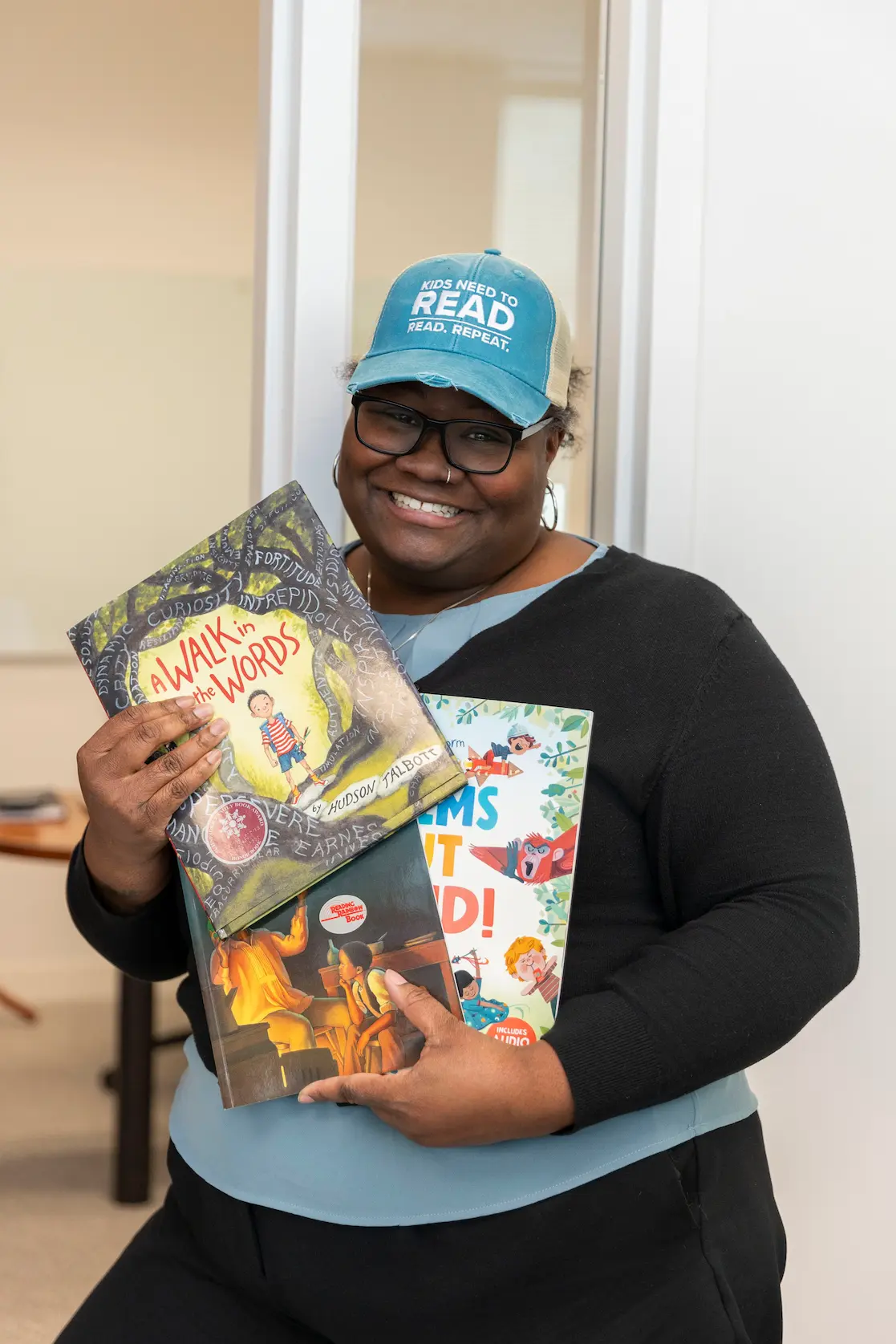
Literacy is a Public Health Crisis in Communities Across Virginia. Only 57% of third graders demonstrate proficiency in reading. That means nearly half of our Virginian children are not reading at grade level by the end of third grade. This is more than an education crisis. It is a public health crisis.
Research shows that reading proficiency by third grade is one of the strongest predictors of long-term academic success, high school graduation, and college attendance. Children who do not read proficiently are less likely to graduate, limiting future earning potential and opportunities. The reality is that literacy is about more than decoding words on a page. It is about health, confidence, opportunity, dignity, and helping every child reach their full potential.
A child’s literacy level predicts lifelong health outcomes. Low literacy is linked to poorer overall health, difficulty managing chronic conditions, and even shorter life expectancy. The National Institutes of Health has documented this connection, and “Language and Literacy” is listed as a priority area in the Healthy People 2030 initiative. Children who struggle to read are also more likely to suffer from anxiety, stress, and behavioral challenges, further compounding potential physical health challenges.
As a pediatrician, I see these challenges every day as families lack access to the tools to help struggling readers. Pediatricians and other child health providers are uniquely positioned to assist families. At every well-child visit, we can prescribe reading; literal scripts and books into the hands of families. Programs like Reach Out and Read put free books into children’s hands at checkups, encouraging parents to read aloud from infancy. Dolly Parton’s Imagination Library (DPIL)is another book gifting program that mails age-appropriate, high-quality books to children from birth to age five, regardless of their family’s income to inspire a love of reading. A child and family enrolled at birth will have a home library of over 60 books. Each book comes with a letter from Dolly, title-specific reading activities for families to engage and interact. Books are carefully selected and available in English, Spanish and Braille.
These may seem like small steps, but they are powerful. Early shared reading stimulates development, strengthens caregiver-child relationships, and lays the foundation for kindergarten readiness. During our well visits, we can detect earlier delays in language, cognitive abilities and can get interventions started for children earlier. When we miss these opportunities, it can lead to increased academic and social challenges.
While we know that reading is important, for many families, books are often a luxury and unable to be prioritized for financial reasons. Families in under-resourced communities often lack home libraries, face barriers to library access, and experience toxic stressors like poverty or family violence. Socioeconomic disadvantage is associated with reduced vocabulary and word processing skills. Our under-resourced families have fewer literacy resources within the home, and children are less likely to be read to regularly, and more likely to experience childhood adversity and toxic stress even before they have access to preschool interventions.
One in four of Virginia’s kindergartners are not meeting literacy benchmarks.
The good news is we know what works. Fostering a love for reading at an early age is key to promoting literacy at later ages. Shared reading in the first five years of life can transform outcomes. The American Academy of Pediatrics emphasizes the “Five R’s” of early learning: reading, rhyming, routines, rewards, and relationships, all of which are strengthened by early literacy promotion.
While we know early literacy promotion is effective, many children still don’t have the access to age-appropriate books. For example, currently, only 16% or 78,893 children in Virginia are receiving books through the DPIL. Over 495,000 children and families are eligible and need equitable access to books in communities across Virginia. Ohio just announced that every hospital will offer the ability to sign up for DPIL as part of their birth certificate paperwork. Virginia should do the same and increase state investment for expansion of Dolly Parton’s Imagination Library. Without early support, more children will fall behind and the literacy gaps will widen. That is why we need public-private investment in programs like Reach Out and Read and Dolly Parton’s Imagination Library.
But doctors and parents cannot do this alone. It will take all of us making literacy a top priority. We must invest early and year after year to:
- Increase equitable access to books for all children and create home libraries.
- Put more books in the hands of children and families.
- Enroll every child at birth in Dolly Parton’s Imagination Library.
- Support parents. Creating more parent-centric literacy programs, teaching parents how to read if they are not literate as well as teaching them how to make reading a daily bonding activity, even if that means telling stories from pictures. Provide parents with activities and emphasize the importance of books and reading aloud.
- Expand access to early childhood education. High-quality pre-K programs build critical literacy skills before school begins.
- Fund whole-child support in schools. Nurses, counselors, and psychologists are essential for students’ readiness to learn as well as helping them navigate challenges as they arise in their personal and academic lives.
This issue is urgent. Literacy is not just about report cards. It is about health equity, workforce readiness, and the strength of our communities. If nearly half of Virginia’s third graders cannot read at grade level, we are failing not just students, but our collective future. And it will cost us. Virginia’s literacy problem is not only an education crisis. It is a public health emergency. And like any health emergency, it demands swift, coordinated, and sustained action.
LaTonya D. Russell, MD MPH
Community Pediatrician & Public Health Practitioner